Sant Antoni de Calonge: The Costa Brava Town Most Barcelona Expats Have Never Heard Of
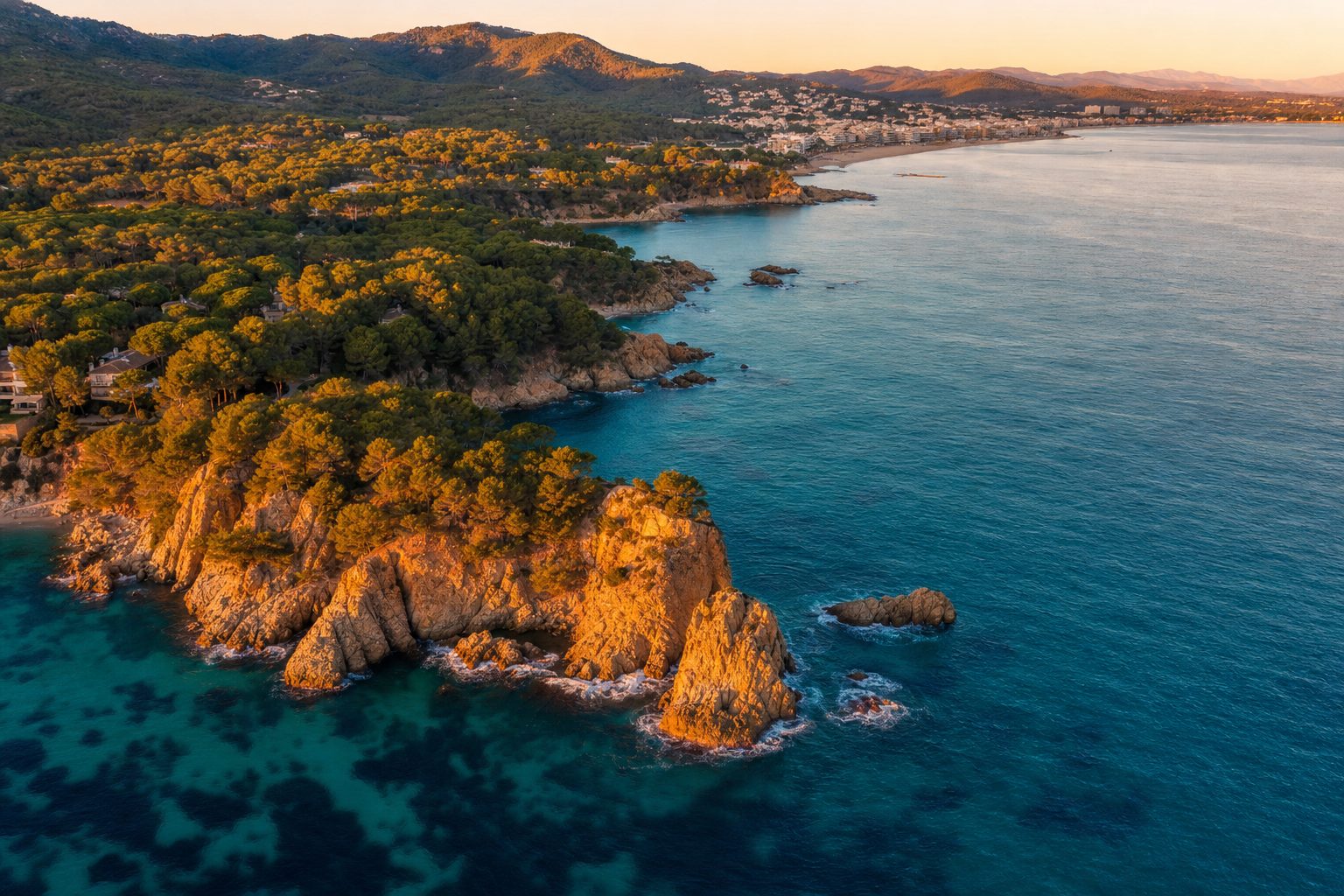
Ask a Barcelona expat family where they've been on the Costa Brava and you'll hear the same handful of names: Begur, Cadaqués, Tossa de Mar, Platja d'Aro. The greatest-hits tour. Postcard towns.
Ask them about Sant Antoni de Calonge and you'll usually get a blank look.
Which is exactly why we love it. Sant Antoni de Calonge is the seaside neighbor of Calonge (its inland old-town twin) in the Baix Empordà comarca of the Costa Brava — a proper working Catalan coastal town with a real fishing history, a beautiful long beach, a walkable seafront promenade, and none of the Instagram-driven tourism that has swallowed the more famous names. It's where Joia del Mar sits, on the hillside above town.
This is a local's guide. Where to eat, where to walk, where to swim, and why we think it's the smartest place on this coast for a family that wants beach life without the crowds.
The geography, quickly
Sant Antoni de Calonge sits on the coast about 100km north of Barcelona and 40km east of Girona. To orient yourself:
- Palamós is 10 minutes north — bigger, more restaurants, best seafood market on this stretch of coast
- Platja d'Aro is 14 minutes south — the party town, lively summer nights
- Sant Feliu de Guíxols is 30 minutes south — the more refined promenade town
- Palafrugell and Begur are 30 minutes north — the postcard old-town circuit
You get all of those within an easy drive. But you sleep and eat in Sant Antoni de Calonge, which stays quiet.
From Barcelona: 1h15 via AP-7 and then C-31 through Palamós. From Girona-Costa Brava airport: 30 minutes.
The beach
The main beach — Platja de Sant Antoni — is a long crescent of coarse sand about 2 kilometers end to end. Not the fine white sand of the Balearics; this is proper Costa Brava beach with texture and pine trees behind it. What matters:
- Blue Flag certified every year — the water is genuinely clean
- Family friendly. Gradual slope into the water, lifeguards in summer, showers, playgrounds along the promenade
- Not overcrowded even in August. You'll always find a spot. Compare that to Tamariu or Sa Riera where you circle for parking for an hour.
- Two small chiringuitos on the beach that serve reasonable paellas and cold beer. Nothing pretentious.
Better cove alternative for a Sunday: drive 5 minutes north to Cala Torre Valentina, a smaller cove with clear water and fewer people. Locals only.
The seafront promenade
The Passeig del Mar runs the length of the beach — about 2 kilometers of flat, wide, palm-tree-lined promenade. This is the most-used feature of the town for families. What you do here:
- Morning: run or walk the length before it gets hot. About 25 minutes at an easy pace.
- Late afternoon: ice cream at any of the four or five gelaterias — the one at the north end, near the harbor, is the best. Kids on bikes, grandmothers on benches, everyone out.
- Evening: the paseo — locals walking the promenade slowly in both directions between about 7 and 9 PM. It is genuinely the best way to feel the rhythm of the town.
Where to eat
Real recommendations from families who've eaten here dozens of times. Not the Michelin trap list.
Casual, family-friendly: - Chiringuito Blue Fish — a proper beach shack right on the sand at Passeig Josep Mundet, seafood-forward, wide open hours in season. Book ahead in July and August. - Restaurant Guillermu — first-line on the promenade at Passeig Josep Mundet 57. Family-run, kilómetro-cero, local wines from Calonge and fish landed in Palamós. Good for a longer lunch with kids. - Nautilus — one of the highest-rated seafood spots in town, still relaxed enough for a family dinner. Classic Catalan seafood done well.
Something nicer: - Refugi de Pescadors — the room everyone recommends, at Passeig Josep Mundet 55. Traditional Empordà seafood, arroces, the house llobarro al fonoll (sea bass with fennel). Book two weeks ahead for a summer weekend. - Restaurant Sa Calma — a smaller, quieter option in town when you want a slower dinner without a Palamós drive.
Market day: - Weekly market in Sant Antoni de Calonge — Wednesdays 8 AM to 2 PM along Passeig Josep Mundet. Produce, cheese, clothes, everyday things. - Palafrugell Sunday market (25 min drive) — the biggest and best market in the region on a Sunday morning, 8:00 to 1:30 on Carrer de Pi i Margall. Worth the drive once a month.
Where to walk
Three walks that give you the range:
- Camí de Ronda north to Palamós — starts at the north end of the promenade and follows the coastal path along cliffs and coves for about an hour. Turn back or keep going into Palamós for lunch.
- Camí de Ronda south to Platja d'Aro — the more scenic direction, about 90 minutes. Multiple small coves to swim at along the way. Bring water.
- Castell de Calonge — the medieval castle in the old town of Calonge (inland), a 15-minute drive from the villa. Easy walk with kids, great views over the vineyards.
Where to shop
The everyday-life kind:
- Supermercat Bon Preu on the road into town — full grocery store, better than the Mercadonas nearer the beach.
- Local bakeries and forns on the streets one block inland from the beach — the town has several. Ask your host which one is baking coca that week.
- Mercat de la Llotja del Peix, Palamós — the fish auction market, 10 minutes north at Moll Pesquer. The peixateries open weekday afternoons from 4:30 to 8:00 PM, selling what the trawlers landed that afternoon — including the certified gamba de Palamós when the boats bring it in. Buy the day's catch, cook it that night. This alone is worth the drive. You can also do the guided auction visit through the Museu de la Pesca next door.
- Palafrugell Sunday market (25 min) — see above. The best all-round market in the region.
The kids question
The reason families keep coming back:
- Beach with lifeguards in July and August
- Bike paths along the entire promenade — the town rents kids' bikes
- Playgrounds every 300 meters along the promenade
- Ice cream every 200 meters — this is not a joke, and it makes a huge difference
- Multiple family-focused restaurants where nobody looks sideways at a 3-year-old
- Sailing school in Palamós for older kids in July
- Public pool with kids' lessons for the shoulder-season weekends when the beach is too cold
Why it stays under the radar
Sant Antoni de Calonge doesn't have the medieval walled old town of Tossa de Mar. It doesn't have the postcard whitewash of Cadaqués. It doesn't have the dramatic coves of Begur. Instagram doesn't work here.
What it has instead is a working town with a real community. Half the residents are Catalan families whose grandparents grew up here. There's a rhythm. The panadería knows your name by week three. Nothing is being staged for tourists.
That's exactly what most Barcelona expat families are actually looking for, once they've done the tourist circuit for a summer or two. They want somewhere that feels like their coast, not a place they're borrowing from Instagram.
Where Joia del Mar sits
The villa is on the hillside about a 5-minute drive above town — high enough for uninterrupted sea views, low enough that you're not "in the hills." The whole town is on the doorstep. Ten minutes to Palamós, fifteen to Platja d'Aro, thirty to Begur, thirty to Girona airport, an hour and fifteen to central Barcelona.
That location is why we chose this town in the first place. If you want to see it, we're doing a two-day Open House on October 17-18, 2026 — come walk the villa, walk the town, and see if the rhythm fits your family.
Related reading: - How Expat Families in Barcelona Actually Use a Weekend House on the Costa Brava - Palamós Just North: Best Seafood Market on the Costa Brava — for the market pilgrimage - Begur: Best Base for Cove-Hopping — for the postcard days
Come see the villa in person
The Joia del Mar Open House is October 17–18, 2026. Two hours on-site, a walk through the villa, and honest answers to any questions this post left open.
Request an Open House invitation