How Expat Families in Barcelona Actually Use a Weekend House on the Costa Brava
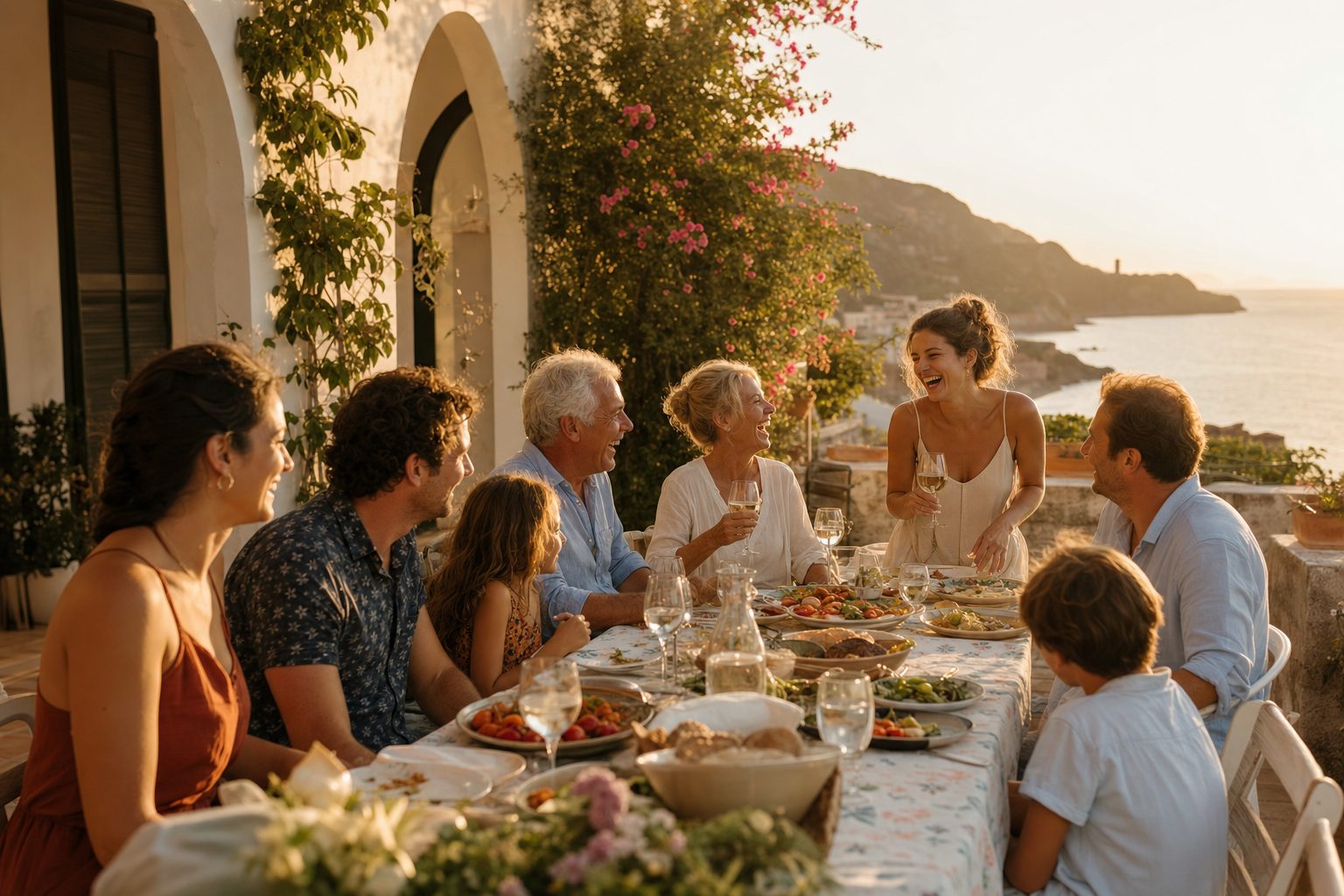
We hear the same question every fall, usually around parent coffee at the American School of Barcelona, Benjamin Franklin International School, or one of the German or French schools: "So what do you actually do on the weekends?"
It comes from expat families in their first year here — Americans, British, Germans, French, Dutch. They've solved the hard problems already. School is sorted, the apartment feels like home, work has a rhythm. But Barcelona weekends don't quite match the pace of family weekends back home. The city is beautiful and full of things to do, but it's also loud, full of tourists in summer, and it doesn't offer the kind of quiet Saturday morning where kids wander into the yard barefoot.
Enter the weekend house on the Costa Brava. Not a vacation. A rhythm. Here's how the expat families we know actually use one — and why the ad-hoc rental model most people default to breaks down after year one.
The Barcelona expat weekend rhythm
The families who do this well settle into something like this:
Friday, 5:00 PM. Pickup at school. Bags already in the car since morning. A snack for the kids in the backseat.
Friday, 6:30 PM. Off the AP-7, onto the winding road toward Sant Antoni de Calonge, Palamós, or Begur. The kids ask if we can stop at the panaderia in Vidreres. We do.
Friday, 7:30 PM. In the villa, windows open, the smell of pine, the sea somewhere below. First glass of wine on the terrace. The kids have already claimed their rooms.
Saturday morning. Slow. Coffee at the villa, maybe a walk down to a cove before the day heats up. The kids wander into the garden barefoot. Breakfast happens twice — once at 8, once at 10 when the guest family we invited out with us finally comes downstairs.
The best weekends here, honestly, are the ones where you bring another family with you. Barcelona expat friendships often stay at school-pickup depth for the first year or two — everyone is polite, everyone is busy, everyone runs off to their own weekend. A villa changes that. When you spend 48 hours with another family cooking, swimming, and doing nothing together, the friendship jumps a level in a single weekend. And the kids — the kids get the closest thing to summer-camp bonding they'll experience during the school year.
Saturday afternoon. The market in Palafrugell, or a quiet cove like Sa Riera or Tamariu. Not the tourist beaches. Never Lloret. The families who own or share here know which coves have parking, which have shade, which have the good chiringuito. Both families pile into one car. The kids negotiate seat assignments loudly.
Saturday evening. Grill on the terrace. The two families cook together — someone owns the fish, someone owns the salad, the kids are in charge of setting the long table outside. Dinner is at 9. Nobody is scheduling anything. This is the meal your kids will remember from this year in Barcelona.
Sunday. Longer breakfast. A hike into the Gavarres if the weather is right. Back to Barcelona by 4 or 5 to beat the traffic — but only if you have to. The best families we know stretch until Monday morning and let the kids do the drive back in their pajamas for the first bell.
That rhythm is what people are actually paying for. Not the villa, not the pool. The rhythm.
Why ad-hoc rentals stop working after year one
Most expat families start with Airbnb. It makes sense — you don't know yet whether you'll want to keep doing this, whether the kids will like it, whether it'll actually fit into your calendar.
But by month eight or nine, the cracks start showing.
The pricing math gets ugly. A decent family-sized villa on the Costa Brava in July or August runs €800-1,500 per night on Airbnb. That's €5,600-10,500 for a single week. Do that four times a summer and you're at €22,000-42,000. Add a few off-season weekends and you're over the price of an actual second-home deposit.
Booking becomes a project. You want the last weekend of July? So does every other family in Barcelona. Prime dates require booking in February and locking in a specific villa you may or may not love. Miss the window and you're scrolling Airbnb at 10 PM three weeks out, filtering by "5 bedrooms, pool, near Girona, still available."
Nothing is ever quite yours. Different kitchen every time. Different mattresses. Different neighbors. The kids never stop asking "wait, which house is this one?" The dog can't come. The bikes stay in the city. The playlist you spent two years curating on the Sonos in your Barcelona apartment doesn't help you here.
The weekends stop feeling different. By the fourth rental the novelty is gone but the friction is still there. You do the drive, the check-in, the "where do we put the trash" figuring, the arrival cleaning of the fridge — every single time. It stops being an escape and starts being a project.
The three models expat families actually consider (after year one)
Once families decide they want something more permanent, they usually look at four options. Here's how they actually shake out:
1. Buy a second home outright
The obvious path. Also the most expensive and by far the most complicated.
- Purchase price: €600,000 for something modest inland, easily €1.5M+ for a villa with a pool and sea views near the coast.
- Transaction costs: 10-13% on top for taxes, notary, registration.
- Annual costs: IBI (property tax), community fees if there is a community, insurance, utilities year-round, pool maintenance, garden, wifi, security. Realistically €10,000-25,000 per year even when you're not there.
- The hidden tax: You're now a Spanish property owner as a non-resident. Modelo 720, wealth tax in Catalonia (which is real), non-resident income tax on imputed rental income. Get an accountant, and expect surprises.
- The real killer: upkeep. Someone has to check on the house between visits. Storms, leaks, the garden, the pool, the neighbor who parks in your driveway. It ends up being either a job for one spouse or an expensive property manager.
Best for families who plan to stay in Spain 10+ years and want to eventually retire here.
2. Fractional ownership (Vivla, SmartOwner, etc.)
The newer alternative that's marketed hard to expats.
- Buy-in: €200,000-500,000 for one eighth of a property.
- You get: Roughly 6 weeks per year at that specific property, tied to a rotating calendar.
- Ongoing: Annual HOA-style fees of €5,000-15,000 for staff, upkeep, and management.
- Exit: In theory you can sell your share. In practice the resale market is thin and priced at whatever the operator says.
- The catch: You're on title with 7 other families. Legally more like a co-op than a rental. If someone stops paying their share of the HOA, you're all responsible.
Best for families who want the feeling of ownership and are OK with the legal complexity.
3. Membership (like Joia del Mar)
The lightest-commitment version.
- Cost: €15,000 per year, annually renewable. No purchase, no deed.
- You get: 6 weeks per year at a specific 5-bedroom villa on the Costa Brava, with holidays rotated fairly among 6 founding families.
- Ongoing: The €15,000 is all-in. No surprise HOA fees, no property tax, no non-resident income tax exposure, no upkeep.
- Exit: Don't renew next year. That's it.
- What you don't get: Equity. If the villa doubles in value, you don't share in that. But you also don't share in the downside if it drops.
Best for families who want the rhythm without the legal or financial complexity of ownership. This is the model we built Joia del Mar around.
The math for a typical Barcelona expat family
Say you're an expat family that does about 6 weeks a year on the Costa Brava:
| Model | Year 1 cost | Ongoing years | 5-year total |
|---|---|---|---|
| Ad-hoc rentals (mixed peak/off) | €22,000-35,000 | €22,000-35,000 | €110K-175K |
| Buy €1M villa | €130,000 (down payment) + €15K upkeep | €15K upkeep + mortgage | €300K-600K depending on financing |
| Fractional 1/8 share | €300,000 buy-in + €10K annual | €10K annual | €340K (+ share value at exit) |
| Membership (Joia del Mar) | €15,000 | €15,000 | €75,000 |
The membership model isn't for everyone. If you know you'll be in Spain forever and you want your kids to inherit the villa, buy something. But if you're an expat family who is here for 3-7 years, uncertain about the long-term, and just wants the rhythm without becoming a Spanish property investor by accident — membership is the model that actually fits your life.
What we've learned from six years of doing this
Julie and I bought Joia del Mar in 2020, moved down from Barcelona to spend summers there, and slowly realized the property was too much for one family to use well. It was too beautiful to sit empty ten months a year and too much to maintain for six weeks of use.
The families we've talked to about joining as founding members are almost all in the same shape: expat parents, kids in international schools in Barcelona, here for the medium term, tired of Airbnb, not ready to buy. They want the rhythm we described at the top. They don't want to become part-time property managers.
If that's you and you want to see the villa in person, we're doing an Open House on October 17-18, 2026. Come out, walk the property, meet the neighbors, and see if the rhythm feels right.
Related reading: - How a Shared Vacation Home Actually Works for Expat Families in Spain — the fractional vs membership deep dive - Sant Antoni de Calonge: The Town Most Barcelona Expats Have Never Heard Of — where the villa actually is - The Founding Family Membership, explained — the terms in plain language
Come see the villa in person
The Joia del Mar Open House is October 17–18, 2026. Two hours on-site, a walk through the villa, and honest answers to any questions this post left open.
Request an Open House invitation